너무나도 더웠던 2026년 8월 7일. 문경 구 쌍용양회 공장에서는 공장의 새로운 미래를 꿈꾸는 이들이 모여 아침부터 늦은 오후까지 함께 소중한 시간을 보냈습니다.
먼저 오전에는 점촌4동 주민협의체 구성원이자 구 쌍용양회 노동자이신 김환국, 이병각 두 선생님의 안내로 무더운 날씨 속애서도 공장을 구석 구석 둘러볼 수 있었습니다. 점심 식사 후에는 주민협의체 바리스타 선생님들이 내려주신 맛있는 커피를 마실 수 있었구요.
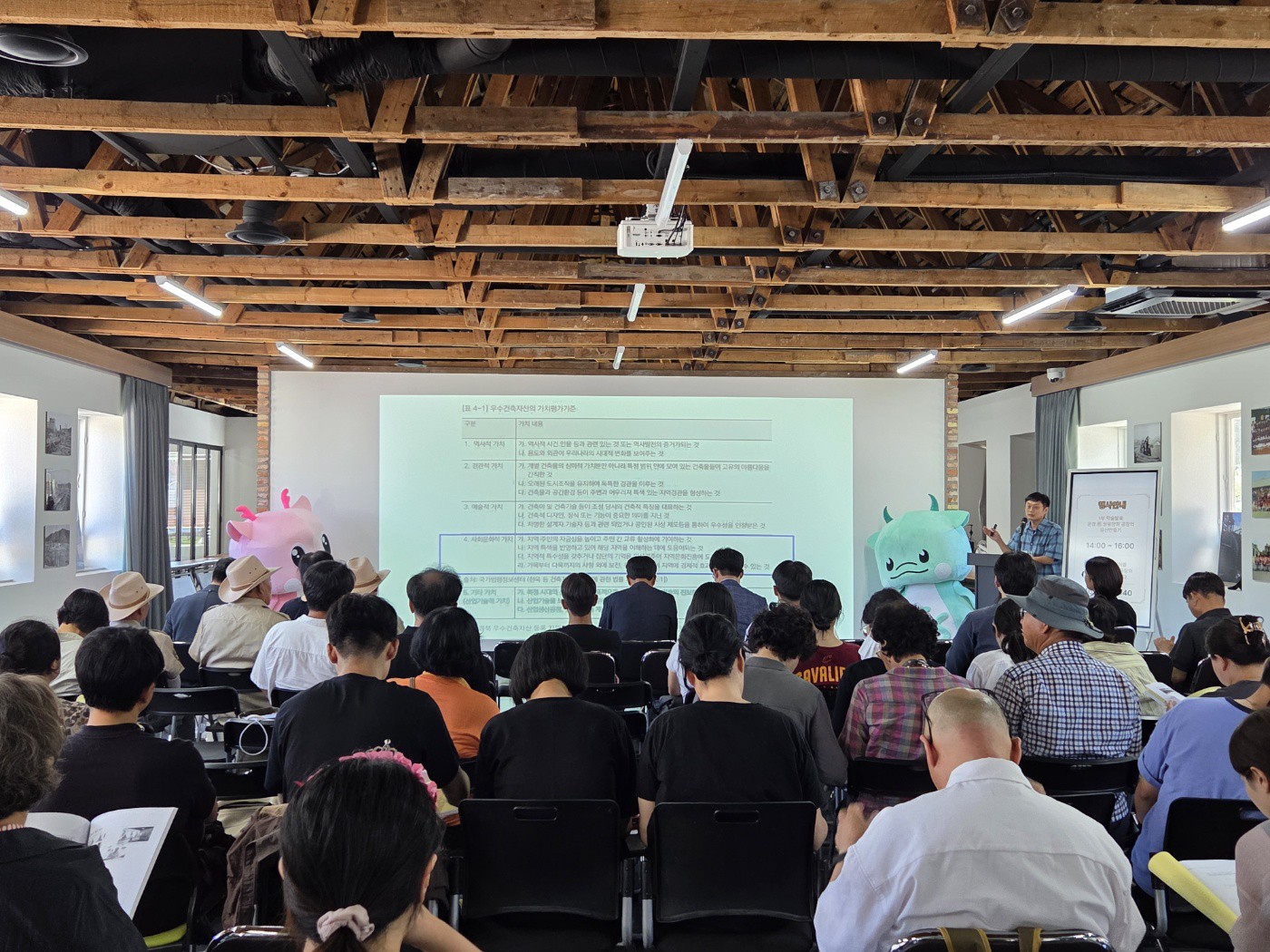
오후로 이어진 학술세미나에서는 8분의 발표로 풍성한 배움의 시간을 가졌습니다. 이연경 교수의 발표로 문경 쌍용양회 공장의 역사적 의미와 유산으로서의 가치를 먼저 살펴보았고, 이어서 쌍용양회 은퇴노동자이신 김환국, 유성해, 이병각 세 분 선생님과 안근철 아키비스트가 함께 공장을 공동체유산으로 만들어가는 과정애 대한 특별한 발표를 해 주셨습니다. 이어서 좋은 선례가 되어 준 쌍용양회 동해공장 쇄석장(채석장) 리노배이션 사례를 김효영 건축가님과 유무형 연구소 이정은 대표님께서 생생히 들려주셨습니다. 마지막으로 경인콜랙티브 김은희 작가님께서 공장에서 노동자와 호흡하며 그려낸 노동의 암묵지에 대해, 예술과 아카이빙이 함께한 프로젝트에 대해 말씀해주셨습니다. 모든 발표자들의 이보다 더 좋을 수 없이 좋았던 발표 덕분에 70분에 이르는 많은 청중들이 매우 집중하여 학술세미나에 참여했습니다.
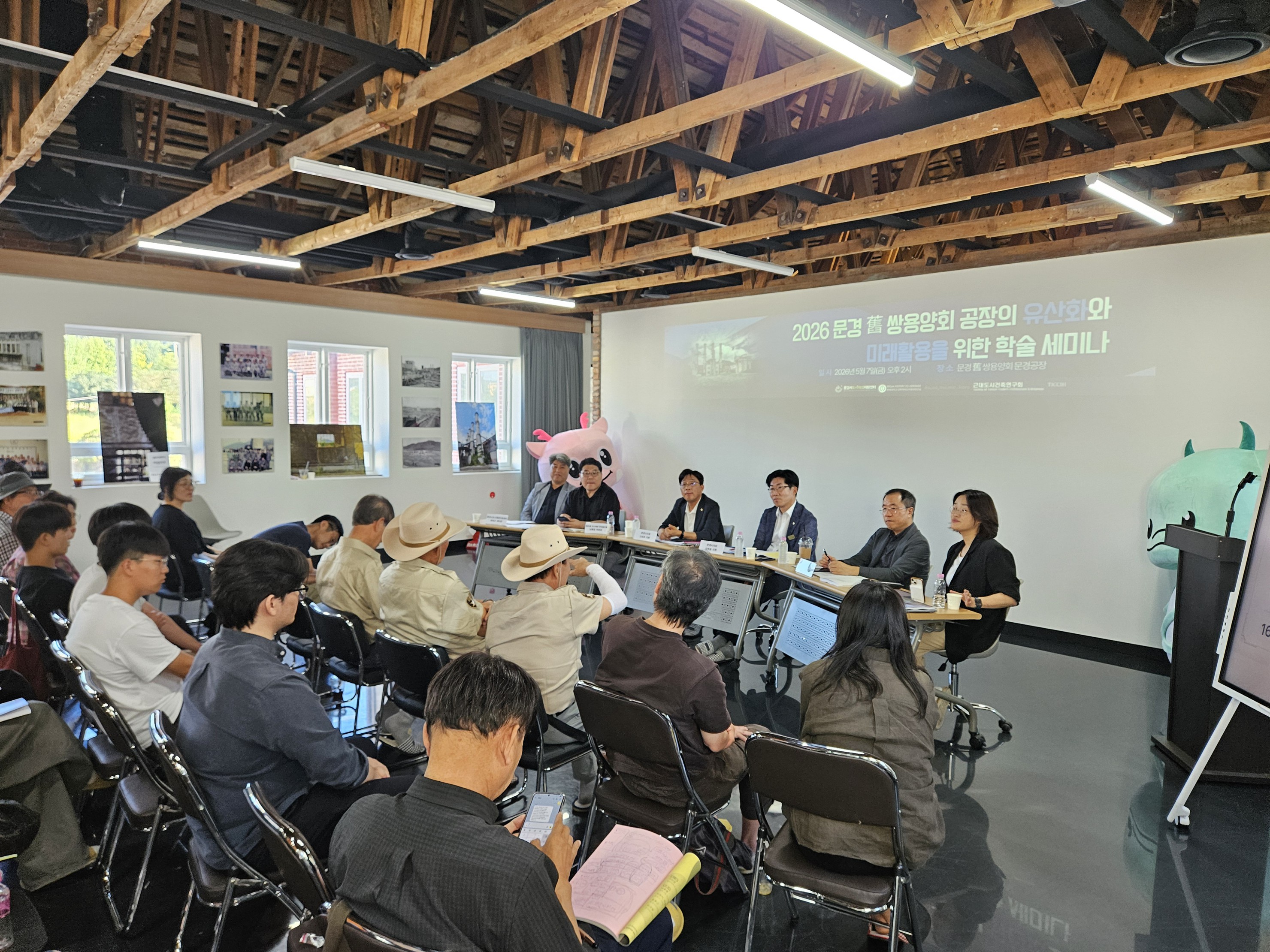
2부 라운드테이블에서는 윤효근 문경시도시재생지원센터 센터장님, 남충열 주민협의체 위원장님, 문경시 시의원이신 신성호, 임휘철 의원님들(+서정식 의장님은 서면으로), 그리고 건축공간연구원 이규철 연구위원님까지 함께 하시면서 구체적으로 문경 공장의 미래애 대해 깊은 논의를 진행하였습니다. 할 수 있는 것부터 하나씩 차근차근, 주민이 주도하는, 또한 시설의 온전한 보존을 전제로 하는 활용과 우수건축자산 등록까지 의미있는 논의들이 이어졌습니다.
이후 계속된 토론 시간에서는 주민분들과 전문가분들의 진심어린 조언과 의견들이 이어졌습니다. 특히 이 공간에 대한 각별한 애정을 가진 주민분들의 이야기를 들으며 이 곳의 유산화에 대한 열정과 의지를 확인할 수 있어 좋았습니다.
이번 행사를 후원해 주신 도코모모코리아, 근대도시건축연구회, 티키코리아 회장이신 김기수, 송석기, 강동진 교수님께서는 바쁘신 와중에 직접 오셔서 문경 지역 유산의 네트워크화, 제도적 체계화의 필요성과 현 상황에 대한 진단, 그리고 유수건축자산, 국가유산을 넘어 세계유산으로의 추진까지 중요한 조언들을 해 주셨습니다.
또한 무엇보다 동아대학교와 부경대학교 학생들이 이 세미나에 와 주시고, 또 좋은 의견까지 내어주어 감사했습니다.
너무나도 특별한 시간을 만들어주신 여러분들 진심으로 감사합니다. 대한민국의 중심이라 어디에서 출발해도 3시간이 걸리는 ㅎㅎ 문경까지 달려와주셔서 세미나 장소를 가득 채워주셔서 감사합니다. 작년에 이어 올해도 70분이 넘게 와주셨어요. 앞으로도 소식 종종 전하겠습니다.
+ 도움 주신 많은 분들 너무 감사합니다. 특히 지난 1년간 넘 수고해준 안근철 선생님, 이희열 연구원님, 건축공간연구원 건축문화자산센터 감사합니다.
August 7, 2026 — one of the hottest days of the summer.
At the former Ssangyong Cement Plant in Mungyeong, people who share a vision for a new future for the site came together and spent a truly meaningful day together, from the morning until late afternoon.
In the morning, we had the opportunity to explore the plant in detail despite the intense heat, guided by Mr. Hwan-guk Kim and Mr. Byeong-gak Lee, members of the Jomchon 4-dong Residents’ Council and former workers at the Ssangyong Cement Plant. Their firsthand stories brought the spaces and facilities of the plant to life, reminding us once again that this is not simply an industrial facility, but a place where the memories and experiences of countless people have accumulated over time.
After lunch, we enjoyed delicious coffee prepared by the baristas from the Residents’ Council.
The afternoon continued with an academic seminar featuring eight presentations and a rich exchange of ideas.
Professor Yeonkyung Lee opened the seminar by examining the historical significance of the Mungyeong Ssangyong Cement Plant and its value as heritage. This was followed by a special presentation by retired Ssangyong Cement workers Hwan-guk Kim, Seong-hae Yoo, and Byeong-gak Lee, together with archivist Geun-cheol Ahn, who shared their experiences of the ongoing process of transforming the plant into a form of community heritage.
We then heard an inspiring case of the renovation of the crushed-stone facility (quarry) at the former Ssangyong Cement Donghae Plant, presented by architect Hyoyoung Kim and Jungeun Lee of Yumu-Hyeong Research Institute. Their work offered an important precedent for thinking about the future of the Mungyeong site.
Finally, artist Eunhee Kim of Gyeongin Collective spoke about the tacit knowledge of labor that she encountered and documented while working alongside former workers at the plant, and about a project that brought together art and archival practices.
Thanks to the thoughtful and engaging presentations by all of the speakers, more than 70 participants remained deeply engaged throughout the seminar.
In the second part, a roundtable discussion, we were joined by Hyogeun Yoon, Director of the Mungyeong Urban Regeneration Support Center; Choongyeol Nam, Chair of the Residents’ Council; City Council Members Seongho Shin and Hwichul Lim (with Chair Seojeongsik participating in writing); and Gyuchul Lee, Research Fellow at the Architecture & Urban Research Institute.
Together, we had a deep and substantive discussion about the future of the former Mungyeong plant.
A number of important ideas emerged: starting step by step with what can be done now; ensuring that local residents take the lead; pursuing new uses while maintaining the integrity of the existing facilities; and exploring institutional frameworks such as registration as an Excellent Architectural Asset.
The discussion continued with residents and experts sharing candid advice and thoughtful perspectives. Above all, hearing from local residents who have such a deep personal connection to this place allowed us to witness firsthand their strong commitment and enthusiasm for transforming the site into a meaningful heritage for the future.
We are also deeply grateful to DOCOMOMO Korea, the Society of Korean Modern Architecture & Urbanism, and TIKI Korea, and to Professors Kisu Kim, Seokgi Song, and Dongjin Kang, who supported this event and took the time to travel to Mungyeong themselves despite their busy schedules.
They shared important insights on the need to build networks among Mungyeong’s heritage resources, establish stronger institutional frameworks, assess the current situation, and consider the possibility of developing the site beyond recognition as an Excellent Architectural Asset or National Heritage toward its potential as World Heritage.
We would also like to sincerely thank the students from Dong-A University and Pukyong National University for making the journey to Mungyeong, participating in the seminar, and sharing their thoughtful ideas.
Most of all, thank you to everyone who helped make this such a special day.
Mungyeong may be at the geographic center of Korea, but, as we joked, it still takes about three hours to get there from almost anywhere! 😄 Thank you to everyone who made the long journey and helped fill the seminar venue. More than 70 people joined us this year as well, following last year’s event.
There is still a long way to go, but I hope this gathering will become one small but meaningful starting point for imagining a new future for the former Ssangyong Cement Plant in Mungyeong.
We will continue to share the stories and developments from this place from time to time.
And a very special thank you to Geun-cheol Ahn, Hee-yeol Lee, and the Architectural and Cultural Heritage Center of the Architecture & Urban Research Institute for all their hard work and dedication over the past year.
Thank you sincerely to everyone who joined us and made this day possible